Category Archives: Hung Kyun Techniques

Practical Hung Kyun Techniques

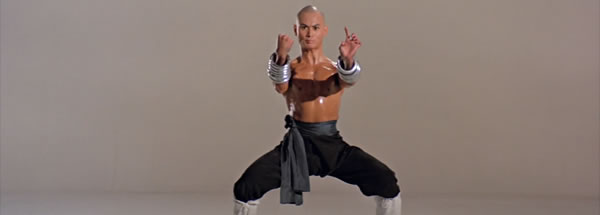
Do you train with Hung Ga Iron or Brass Rings?

Hung Ga Iron or Brass Rings?

One of the things that drew me many years ago to Hung Ga was the use of Iron Rings.

Because of my attraction to the idea of training with the Ring, I searched for posts and literature on them.  I have read many documents and posts about why people think they are a valuable training tool and also why many people think that they are pointless or have been superseded by modern tools.

Even between the two lineages of Hung Ga Kyun in which I have trained my two different Sifu’s have had different views as to which forms you are allowed to use them to train with. Continue reading

Loading

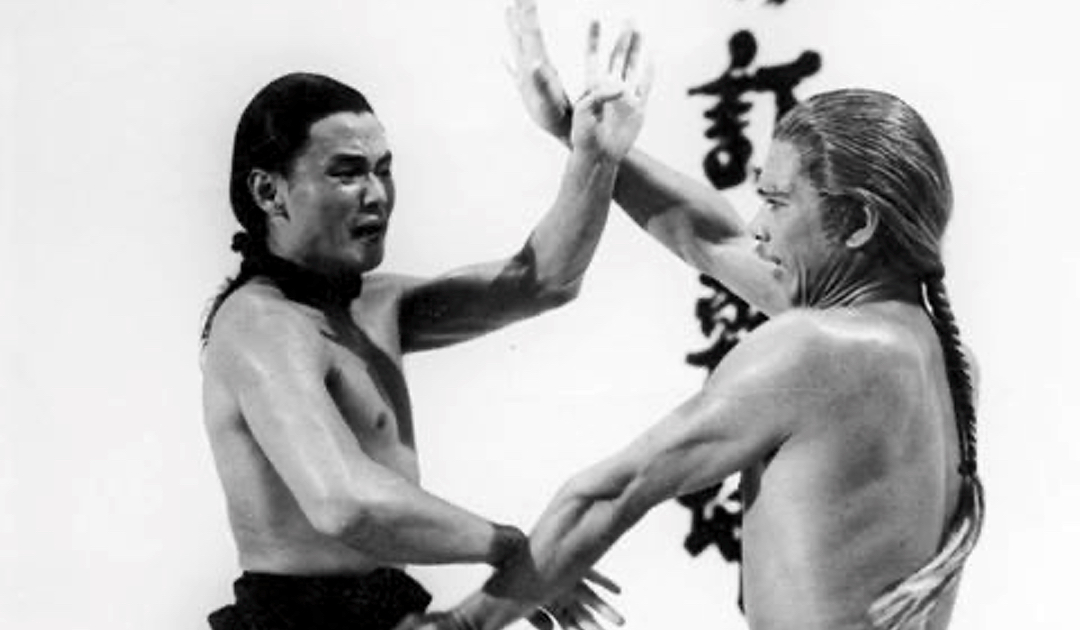
“Tiger and Crane Double Form Set”: Wong Fei Hung’s Best of Southern Fist

"Tiger and Crane Double Form Set": Wong Fei Hung's Best of Southern Fist

Fu Hok Seung Ying Kyun is one of the methods of our martial arts style. This set was created by the late Grand Master Wong Fei Hung. When he was a child, he made an itinerant living as a street performer together with his father, Great Grand Master [Wong Kei Ying].

In his prime, we worked as a coach of Lau’s and Ng’s army. He became very famous and has met many other excellent Masters. He picked up the the essential techniques of various famous styles, has mastered them through a comprehensive study,  transformed them and created Fu Hok Seung Ying Kyun.”

The paragraph above comes from the Wong Man Kai’s “Informal Discussion about the Tiger and Crane Double Form Set”, published in Lam Sai Wing’s Memorial book (full English translation available HERE).

Wong continues: Continue reading

Loading

Hung Ga Kyun Ground Fighting: “Scissor Kick”

Hung Ga Scissor KickQuestion: “Hung Ga Scissor Kick” – Sifu, how does it look like?

In what Hung Ga set can I find it?

What is the proper Chinese name?

Can you please show how is it used?

Thank you!

Grzegorz M.

Answer: “Scissor Leg Technique” (Gau Jin Teui Faat) is one our “Special Skills” (Jyut Gei). Apart from relatively recently composed set called “Butterfly Palms” (Wu Dip Jeung, which by the way isn’t part of our curriculum), you will not find it in any of the commonly taught Hung Ga Kyun sets.

Interestingly, not all techniques were transmitted via set training – many of the special patterns or combinations were taught as individual techniques. “Scissor Leg Technique” (Gau Jin Teui Faat), also called “Golden Coin Falls to the Ground” (Gam Chin Lok Dei), is one of them. Continue reading

Loading

Leung Sifu and Hung Ga “Iron Wire Set” (Rare Article to Download)

Lau Family Hung Ga Kyun

Download a vintage article about the history of “Iron Wire Set” (Tit Sin Kyun) and Hung Ga Kyun training in general – a sample of our highly appreciated special collection of Hung Ga articles from the legendary 1970s’ Real Kung Fu magazine.

Leung Hon Gwong is one of the senior disciples of Grand Master Lau Jaam (Lau Jaam was Lam Sai Wing’s student and father of the late Grand Master Lau Kar-Leung).

You will find out some interesting info about Hung Kyun training, for fighting, as well as good health (I specially like the part about “launching  direct attack with great forcefulness”). Continue reading

Loading

Hung Ga Kyun’s “Three Stars Conditioning”: 12 Practical Tips

“Three Stars Hitting” or “Three Stars Conditioning” (Da Saam Sing) is one of the most commonly practiced drills in Southern Chinese martial arts.

Do you practice “Three Stars”?

Why and how?

Do you practice it correctly, with a specific aim?

Check out 12 tips and fine points of Da Saam Sing from our Practical Hung Kyun training methodology!

Hung Ga Kyun Three Stars Hitting (Da Saam Sing)

Continue reading

Loading

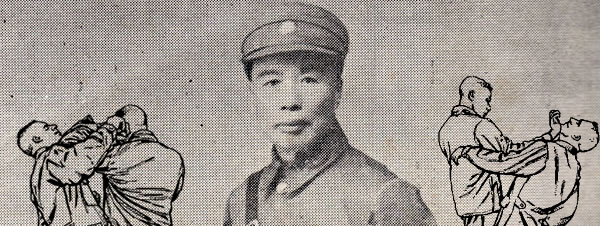
Hung Ga, Lam Sai Wing and Army Combatives

Hung Ga Kyun and Army Combatives

Question: I have heard that Grand Master Lam Sai Wing has taught in the army. Is it true? Can you please give some examples of simple Hung Gar bare-hand combat techniques that could be used in an unarmed combat situation in the army or on the street today?

Harvey H.

Answer: It is well documented that Wong Fei Hung, Lam Sai Wing (and various other Hung Ga Kyun Masters) taught martial arts in the army.

Wong Fei Hung served his duty under famous army commanders Lau Wing Fuk, Ng Chyun Mei, Tong Ging Sung, Lam Sai Wing under Lei Fuk Lam, and Chan Jai Tong. (You can find out more in the intro parts of Lam Sai Wing Memorial Book and Lam Sai Wing’s Taming the Tiger Manual).

Their function wasn’t only honorary. We can only guess what specifically they taught in the army. Still, we know that both Wong Fei Hung and Lam Sai Wing taught actual combat techniques – not only strength/conditioning drills to keep the soldiers disciplined and fit, but also weapon and bare-handed combat skills. Moreover, they taught and learned from the other Masters and cross-trained.

Continue reading

Loading

Practical Hung Kyun Drills: Fighting Multiple Opponents (Video)

Practical Hung Kyun Drills: Fighting Multiple Opponents (Video)

Traditional Chinese maxim says: “two fists are no match against four hands” (Seung Kyun Bat Dik Sei Sau). Indeed – apart from an armed assailant, one of the worst case self-defense scenarios is dealing with multiple opponents.

Practical Hung Kyun sparring drills cover not only regular one on one sparring, but various self-protection scenarios, too – including dealing with multiple attackers. Continue reading

Loading

Hung Ga’s “Taming of the Tiger” Application Drills (Video)

Practical Hung Kyun - Taming the Tiger Self-Defense Drills

Stand-up grappling and counter-grappling techniques, kicks, clinch work and close quarters combative skills, dealing with multiple opponents etc. These and many other are skills are taught in our “Taming of the Tiger in Gung Pattern Set” (Gung Ji Fuk Fu Kyun), 3rd Kap of our Practical Hung Kyun curriculum.

Check out a short video from last week’s training session, devoted the the practice of some of the drills. Continue reading

Loading

Hung Ga’s Twelve Bridges Explained in Twelve Lines (Practical, Plain & Simple)

Hung Ga Kyun Twelve Bridges

Question:  Sifu Macek, can you please briefly explain the “Twelve Bridge Hands” of Hung Ga Kuen? As your school is called Practical Hung Kyun, I would appreciate some practical examples of how to use the “Twelve Bridges” in training or a real fight.

Jorge C.

Answer: First two Bridges – Hard, Soft (Gong, Yau) and the last two Bridges – Control, Adapt (Jai, Ding) are a general Yam/Yeung (Yin/Yang) framework of the remaining eight. We at Practical Hung Kyun want to end up the confrontation as fast as possible, using hard power and total control. If we meet a stronger opponent, we use soft power and adapt to the opponent’s action.

I took your question as a challenge, and tried to explain the “Twelve Bridge Hands” of Hung Ga in twelve lines/paragraphs. Continue reading

Loading

Practical Hung Kyun Knife Self-Defense (Video + Tutorial)

Practical Hung Kyun Knife Defense

Knife attack is definitely one of the most dangerous situation you could get in.

Although the knife defense belongs to the most difficult self-protection skills, we have decided to move it to the beginner levels (2nd Kap), for various reasons.

First, our students might need it tomorrow – the aggressor doesn’t care it is an advanced skill set.

Second, the basic game plan and hold (“two on one”, se bellow) is fully compatible with our strength exercises (Lin Gung) with the long pole that we teach at 2nd Kap, as well as special variation of Kiu Sau conditioning we do, so called Gang Sau. Even if the student won’t specialize in long pole fencing, he will still understand and reap the benefits of long pole Lin Gung training. Continue reading

Loading