Category Archives: Hung Kyun Research

Practical Hung Kyun Research

Hung Ga Kyun Concepts: “Four Arrivals”, Part 1 – “Heart”

Hung Ga Kyun Concepts: “Four Arrivals”, Part 1 – “Heart”Hung Ga’s “Secret of Four Arrivals” (Sei Dou Ji  Bei), mentioned in the Grand Master Lam Sai Wing’s preface to his “Taming the Tiger in Gung Pattern” book (full translation available here), belong to the most important concepts of our art and Chinese martial arts in general.

Because many practioners either do not know the “Four Arrivals” at all, or do not understand them properly, I have decided to write a four part series, explaining the concepts, true meaning and their practical application one by one.

Part one is dedicated to Sam Dou, “Heart Arrival”. Continue reading

Loading

Hung Ga of Dang Family Lineage

Since Dang Gam Tou, the Dang family has been famous in Canton for the Hap Ga style. Dang Lung was impressed by the style and thought it would suit his son because he was of small build. However Dang Lung was famous for his Hung Ga and was known as the ‘Canton Stick King’.

Dang Family Hung Ga

His Hung Ga had been taught to him by his father, Dang Wai Jong, who in turn learned from his own father, Dang Seui Cheung. Seui Cheung learned directly from Hung Hei Gwun. Thus the Dang Family has an unbroken tradition of Hung Ga directly from the founder of the system. Continue reading

Loading

“Night Tiger Emerges from the Forest” – A Rare Set of “Old Hung Ga Kyun”

“Night Tiger Emerges from the Forest” – A Rare Set of “Old Hung Ga Kyun”Night Tiger Emerges from the Forest (Ye Fu Cheut Lam) is a rare set from “Triple Stretch Hung Kyun” (Saam Jin Hung Kyun), a branch of “Old Hung Kyun” (Lou Hung Kyun).

I have seen the “Night Tiger Emerges from the Forest” set for the first time in 1999 in Hong Kong, performed by Leung Gam Gwong sifu, a disciple of Wong Lei, and have been fortunate discuss its details with Leung sifu and his student and my good friend Wong Jung Man Sifu on various occasions during my numerous trips to Hong Kong and China. Continue reading

Loading

Mystery of the Southern Shaolin (Video Series)

Southern Shaolin

Southern Shaolin (Naam Siu Lam) – the riddle, the myth, the legend.

As the Chinese saying: “All martial arts come from Shaolin” (Tin Ha Mou Gung Cheut Siu Lam). Virtually all famous Southern styles, e.g. Hung Ga Kyun, Wing Cheun, Choi Lei Fat, supposedly come from Southern Shaolin Monastery.

To learn more about the Southern Shaolin mystery, please watch the video series below (in Chinese with English subtitles). Continue reading

Loading

Fourth Lam Sai Wing’s Manual?

Lam Sai Wing books

Question: Pavel Macek Sifu, Hello!

Congratulations to your webpage. I have studied the Hung system, but unfortunately, my mentor has passed away.

I know that Grand Master Lam Sai Wing has written 3 books on Hung Ga Kyun. I have also heard that there is a fourth book, dedicated to special training methods.

Do you know this book please? Where can it be obtained?

Sincerely

Fabian U.

 Answer:  As for so called “Lam Sai Wing’s Manuals”, there are many misconceptions .

First of all, none of them was written by Lam Sai Wing – most of them were written by his student Jyu Yu Jai, with help of other classmates. Continue reading

Loading

Hung Ga “Tiger and Crane Double Form” Manual: Please Support the Online Translation Project!

Hung Ga "Tiger and Crane Double Form" Manual: Please Support the Online Translation! Lam Sai Wing’s  “Tiger and Crane Double Form” (Fu Hok Seung Ying) manual, translated and published online on our website? Free?
What do you think about that?

Couple of years ago, Southern Fist Online Community Forum (now offline) run a highly succesful series on “Taming of the Tiger in Gung Pattern” (Gung Ji Fuk Fu Kyun); not exactly a translation of the original manual (we are fortunate to finally have one), but step-by-step discussion of all the moves. Continue reading

Loading

The Secret of “One Finger” (…and Life)

The Secret of "One Finger Bridge Hand" (...and Life)“Do you know what the secret of life is?”
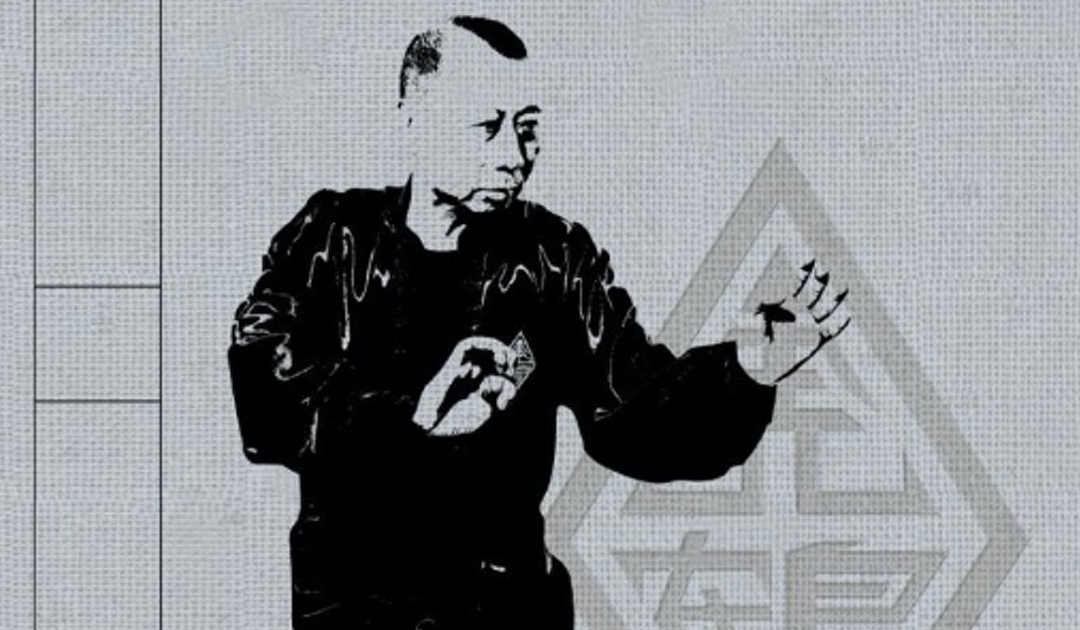
“No, what?”

“This.”

“Your finger?”

“One thing. Just one thing. You stick to that and the rest don’t mean shit.”

“But, what is the “one thing?”

…..

(Check out the video  below to find the answer!) Continue reading

Loading

“Arrow Palm” (Jin Jeung)

"Arrow Palm" (Jin Jeung)

“Arrow Palm” (Jin Jeung), also called “War Palm” (same pronunciation but different Chinese character) is an old Southern Chinese set from the Southern Siu Lam monastery.

When the monastery was burned down, the last abbot of the temple, Ji Sin Sim Si, fled to the Gwong Dung province and hid in the “Red Junks” of the Chinese opera (Hung Syun Hei Baan ), where he taught (among other martial arts skills ) Jin Jeung. Continue reading

Loading

Hung Ga Kyun’s “Eight Trigrams Long Pole” (Ng Long Baat Gwa Gwan)

Ng Long’s Eight Trigrams Long Pole (Ng Long Baat Gwa Gwan)The 4 most famous sets with the “single-ended” long pole (Daan Tau Gwan) are “Six and Half Point Long Pole” (Luk Dim Bun Gwan), “The Flowing Water Long Pole” (Lau Seui Gwan), “Left-Handed Fisherman´s Long Pole (Jo Sau Diu Yu Gwan) and the “Ng Long’s Eight Trigrams Long Pole” (Ng Long Baat Gwa Gwan).
It is often called simply “Eight Trigrams Long Pole” (Baat Gwa Gwan) and it is probably the most famous and most important weapon of the Hung Kyun system.

Brief History of Baat Gwa Gwan

Its roots reach all the way to the Sung dynasty (Song, 960-1279) and general Yeung Ng Long, the fifth son of a Marshall from the Yeung family, famous for its “Yeung family spear” (Yeung Ga Cheung), “the King of all Weapons”. Continue reading

Loading

Hung Kyun‘s “Four Fingers Supporting Heaven” Poem

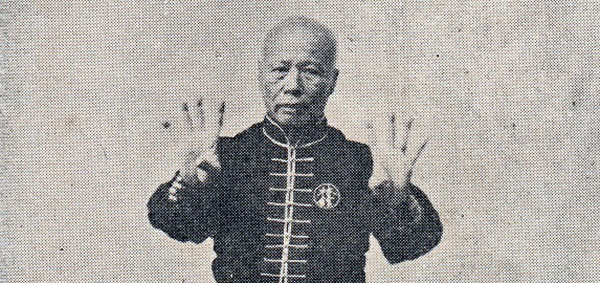
Hung Ga Kyun Lam Sai Wing Iron Bridge“Four Fingers Supporting Heaven” (Sei Ji Chaang Tin) is one of the orthodox Hung Ga Kyun’s “Bridge Hands” (Kiu Sau) training methods.

Is serves as complimentary static “internal” exercise to the “Three Extensions, Threading the Pearls” (Saam Jin Lin Jyu) and develops the „Iron Bridge“, finger strength and overall bodily strength.

Following twenty-eight character mnemonic poem is citing the Venerable Master “Iron Arms” (Tit Bei Sim Si) in his endorsement of this technique: Continue reading

Loading