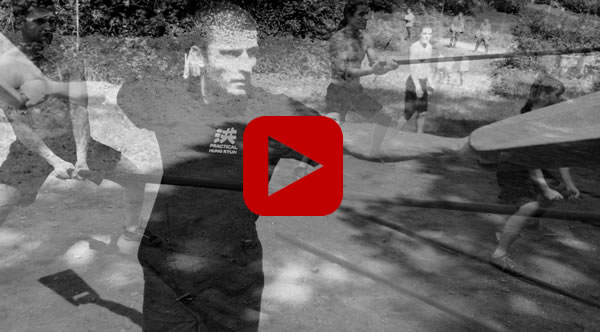
Movement, strength, and usage are 3 main building blocks of PHK Pyramid.
Read a dozen of practical training tips and watch a short action trailer from our 15th PHK Summer Camp! Continue reading

Movement, strength, and usage are 3 main building blocks of PHK Pyramid.
Read a dozen of practical training tips and watch a short action trailer from our 15th PHK Summer Camp! Continue reading
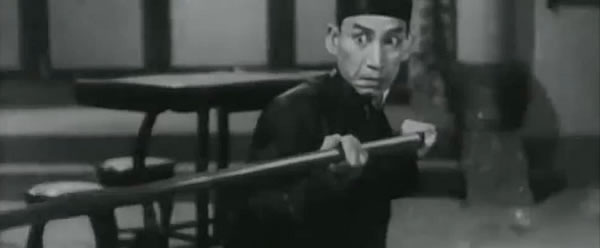
Wong Fei Hung “once defeated a group of thirty men at the same time with a pole in hand”, says the “Tigress”, Madame Mok Gwai Laan, his last wife in the interview for Real Kung Fu magazine (available in Real Hung Kyun, the complete collection of all Hung Ga Kyun articles from Real Kung Fu).
We don’t know much details – his official biography from Fat Saan museum talks about incident in 1868 in Hong Kong harbor, where Wong Fei Hung defeated a local bully and about a dozen of the bad guy’s henchmen with a long pole. Continue reading
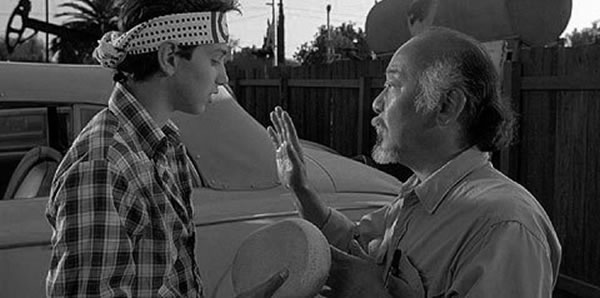
“Wax on, right hand. Wax off, left hand. Wax on, wax off. Breathe in through nose, out the mouth. Wax on, wax off. Don’t forget to breathe, very important.”
Do you remember? I hope you do. And if you don’t know what I am talking about, please do me a favor, and watch (the original) Karate Kid movie series. 1980’s, I know, I know, but still worth watching it.
Mr. Miyagi, portrayed by late Pat Morita – who by the way didn’t know any Karate at all – is definitely a Master we all dreamed of as kids. Or not, especially if you want to learn kicks and strikes, but instead a martial arts school it seems you joined an home improvement company. Continue reading

Grand Master Chiu Kau (1895-1995) was definitely one of the most influential Hung Ga Kyun teachers of the 20th century.
He started to learn Hung Kyun in 1909 under the guidance of Wong Sai Wing Sifu in South Pacific. In 1928 he joined „Lam Sai Wing’s 2nd Branch School” in Hong Kong, together with his wife Siu Ying. Continue reading

One of the main PHK missions is practical usage of all skills that we learn and practice. We don’t stop at sets – we devote a significant amount of training to drills, application drills, strength and conditioning, and of course sparring.
PHK Gym Jihlava, led by Michal Hink, senior disciple of Pavel Macek Sifu, is an example to follow. Check out their new video of “Six and Half Point Long Pole” practice, which is a part of our 2nd Kap beginner’s program. Continue reading
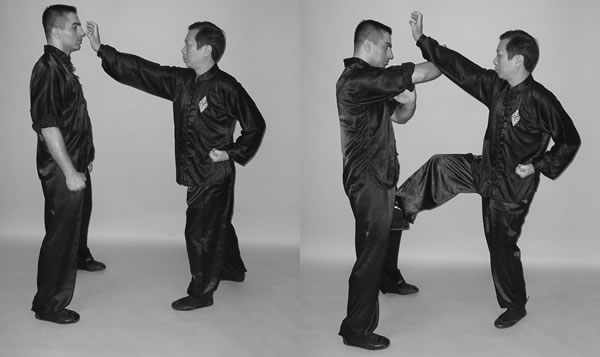
Wong Kei Ying’s “Small Deception-Kick” (Gwai Ji Geuk), commonly called the “Shadowless Kick”, includes the “Yin-Lifting Kick” (Liu Yam Geuk), “Court-Sweeping Leg” (Sou Tong Geuk), “Propping-Rooster Leg” (Chang Gaai Geuk), and “Single-Standing Golden Rooster Leg” (Gam Gaai Duk Laap Geuk). Because issuing such a counter is so extremely fast that the opponent is unable to detect a shadow, these skills are therefore called the “Shadowless Kicks” (Mou Ying Geuk). Continue reading
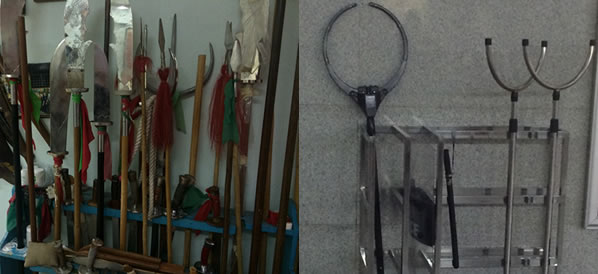
Yes. Double-ended staff, trident (sort of), and other weapons are still used by police security, especially in metro and train stations.
Relatively recently there have been few quite horrible knife mass attacks in China, so the Chinese government has instilled strict security features – scanners, guards, and – various weapons. Continue reading
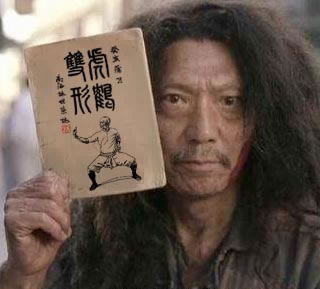 Jyu Yuk Jai’s Tiger Crane Double Form book was the first “Lam Sai Wing’s” manual ever published.
112 drawings of Grand Master Lam Sai Wing, poetical 4 character names for all of the techniques, detailed description of the set, as well as combat sequences.
For all of us Hung Ga Kyun practitioners today it is a rich source of useful and interesting information, but – we should not forget that Jyu Yu Jai was mainly novelist who helped to popularize the Wong Fei Hung’s lineage, although he did learn from Lam Sai Wing and taught the art of Hung Kyun. Not all information is 100% reliable.
During the years of research we have identified some mistakes and inaccuracies in the original Fu Hok Seung Ying manual. Continue reading
We’re very close to finishing our first long awaited online course called PHK Minimum: Beginner’s Guide to Chinese Martial Arts.
We have been working on this project very intensive for last few moths, but we are finally going to wrap it up and release it in the summer 2016.
Our first online course will be focused both on beginning students, or intermediate/advanced students, frustrated with the lack of results following their current training program.
Our PHK Minimum will present samples of the most important basic exercises, training methods and principles from our extensive PHK curriculum – those fundamental exercises that will bring the best results in the shortest time, be it good health, mobility, flexibility, strength, stamina, as well as self-defense skills.

PHK Minimum online course will include 3 main instructional videos: Fundamental Exercises, Strength & Conditioning, Application & Free Fighting, plus accompanying and detailed .pdf manuals (and couple of other bonuses). The course will also include a dozen of theoretical lessons, answering the most common questions, plus a downloadable calligraphy – traditional Chinese saying, explaining the most important principles of Chinese martial arts training. Each lesson will finish with short quiz.
However, we need your help. Before we finalize everything and launch the course, we need to make sure we covered everything.
That is where we need your help. Please take a few minutes to answer this super short survey – there is really only one thing we want to ask you…
What is your top question about Chinese martial arts training that we absolutely need to answer in our PHK Minimum online course?
Please let us know using the email form below!
Would you like to see a sneak preview of the PHK Intro Kit? Click HERE!
![Grand Master Chan Hon Chung performs"Tiger and Crane Double Form" [Rare Video]](https://practicalhungkyun.com/wp-content/uploads/2016/05/chan-hon-chung-hung-ga-tiger-crane.jpg)
Rare video of Grand Master Chan Hon Chung performing the famous “Tiger and Crane Double Form Set” of Hung Ga Kyun.
The footage comes from an old French documentary. Continue reading