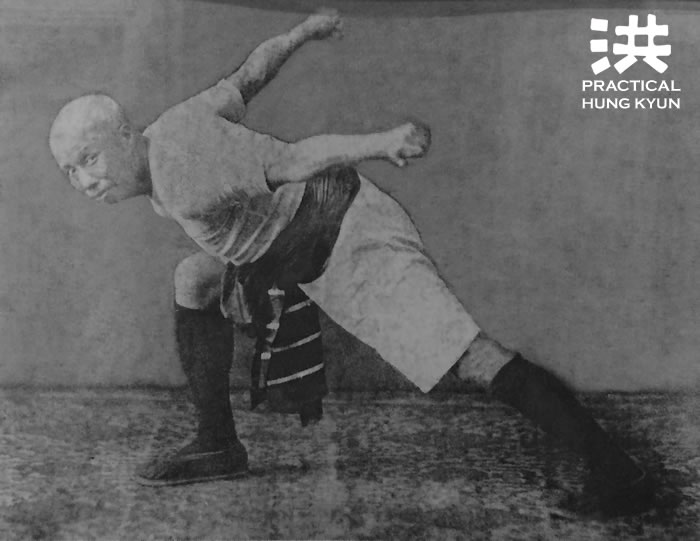
Today’s Hung Ga Kung Fu, also known as “New Hung Kyun” (San Hung Kyun), was signifacantly influenced by another Southern Chinese system, (Tibetan) Hap Ga and its “Long Bridges, Low/Wide Stances” (Cheung Kiu Daai Ma).
Here is a translation of a rare article from an old vintage Hong Kong magazine, telling the story of Wong Yanlam, his mischievous disciple Wong Honwing and their famous “Wing Flap” technique: Continue reading →
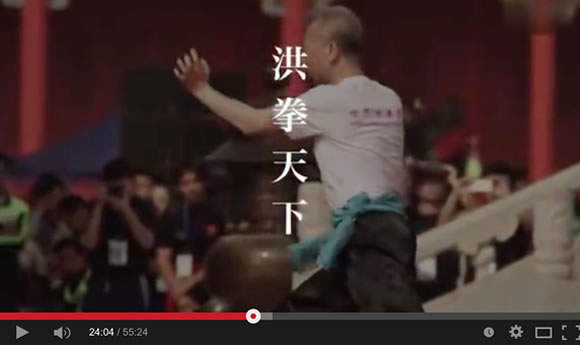
The World of Hung Kyun (Hung Kyun Tin Ha) featuring Grand Master Lam Chun Fai, his son Oscar Lam, and his disciples.
Grand Master speaks about Hung Ga history, his father Grand Master Lam Jou, and his Grand Uncle, Grand Master Lam Sai Wing, training in the old days and today, as well as various Hung Ga sets. Continue reading →
Hung Ga Kyun, Wing Chun, Taijiquan, Jau Ga Tong Long (Mantis), Daai Sing Pek Gwa and more!
Check out an interesting documentary about the history and development of various Chinese martial arts in Hong Kong.
The documentary features – among many famous masters – Grand Master Anthony Lam Chun Fai of Lam Family Hung Kyun. The documentary is in English. Continue reading →
Hung Ga Kyun sets, techniques, applications, weapons, legends and stories…
Do you wonder – are there any “secrets”?
Well, find out!
Get the top information from reliable source & read the special vintage Hung Ga Kyun articles collection from the legendary Hong Kong Secrets of Kung Fu magazine!
“Art of the Iron Head” (Tit Tau Gung) is one of the special hard skills (Ying Ging) of Siu Lam martial arts. The training methodology consists of various methods of strengthening the neck, as well as conditioning the head and hitting various hard surfaces. But as we see in this story, it was no match for Hung Ga Kyun’s “No Shadow Kick” (Mou Ying Geuk).
One of the most famous monasteries in Canton, with extensive martial arts history, is called Hoi Tung Ji. It is said that Ji Sin Sim Si was hiding in Hoi Tung monastery and secretly taught Luk A Choi. Tit Kiu Saam has spend some time in Hoi Tung monastery as well, exchanging various fighting skills with the martial monks. Even in Wong Fei Hung’s times, martial arts were still practiced within the walls of the monastery. Continue reading →
Leung Hon Gwong is one of the senior disciples of Grand Master Lau Jaam (Lau Jaam was Lam Sai Wing’s student and father of the late Grand Master Lau Kar-Leung).
You will find out some interesting info about Hung Kyun training, for fighting, as well as good health (I specially like the part about “launching direct attack with great forcefulness”). Continue reading →
Hung Ga Grand Master Ho Lap Tin, one of the most senor disciples of Grand Master Dang Fong, dedicated a short paragraph to Grand Master Lam Sai Wing in his book “Hung Kyun Application Drills” (Hung Kyun Saan Sau) .
Here is the translation and scan of the original version:
Lam Sai Wing has specialised in Hung Kyun: „Five Animals Set“ (Ng Ying Kyun), „Taming of the Tiger in Gung Pattern“ (Gung Ji Fuk Fu Kyun), „Iron Thread Set“ (Tit Sin Kyun), „Five Elements Set“ (Ng Hang Kyun), all passed from Wong Feihung. Furthemore he has intensively studied one set – „Tiger and Crane Double Form“ (Fu Hok Seung Ying Kyun). Continue reading →
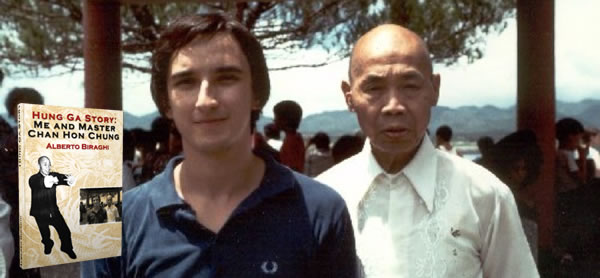
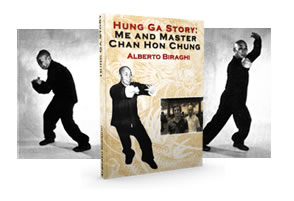
Hung Ga Story: Me and Master Chan Hon Chung: exclusive excerpt from Alberto Biraghi’s excellent book!
Hung Ga Story is a memoir of Alberto Biraghi and his martial arts journey.
Alberto studied the traditional Hung Ga Kyun in Hong Kong with the late Grand Master Chan Hon Chung, spending with him more than a month per year from 1977 until the closing of his historic gym at 729 of Nathan Road.
Are you curious about traditional Gung Fu training in Hong Kong in 1970’s and 1980’s? Well, read on!
Learning the Hung style was not easy in 1977, especially if you were Italian.
I knew nothing about Gung Fu apart from what I saw in a few movies, neither did I know about Chinese culture. In these miserable condition I entered a temple of knowledge and tradition and to make it worse, Benjamin Fung introduced me as “an Italian karate expert who wants to checkout Chinese Gung Fu”. As you can understand the first welcome was kind of cold and suspicious (I didn’t realize it immediately, I was told a month later by the students, after friendship had been established, that no presentation could have been worse in that community). Continue reading →

 Hung Ga Kyun, Wing Chun, Taijiquan, Jau Ga Tong Long (Mantis), Daai Sing Pek Gwa and more!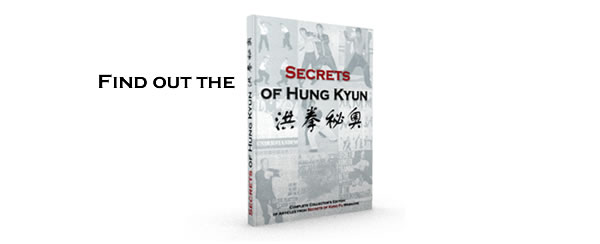

 Hung Ga Grand Master Ho Lap Tin, one of the most senor disciples of Grand Master Dang Fong, dedicated a short paragraph to Grand Master Lam Sai Wing in his book “Hung Kyun Application Drills” (Hung Kyun Saan Sau) .
 “Iron Wire Set” (Tit Sin Kyun), one of the “Three Treasures”, secret and most advanced internal set of Hung Kyun’s curriculum.